Mulch or Bare Soil Around a Border?
Mulch or bare soil around a border depends on plant cover, drainage, and upkeep. Learn how to assess each patch and choose a surface that fits.
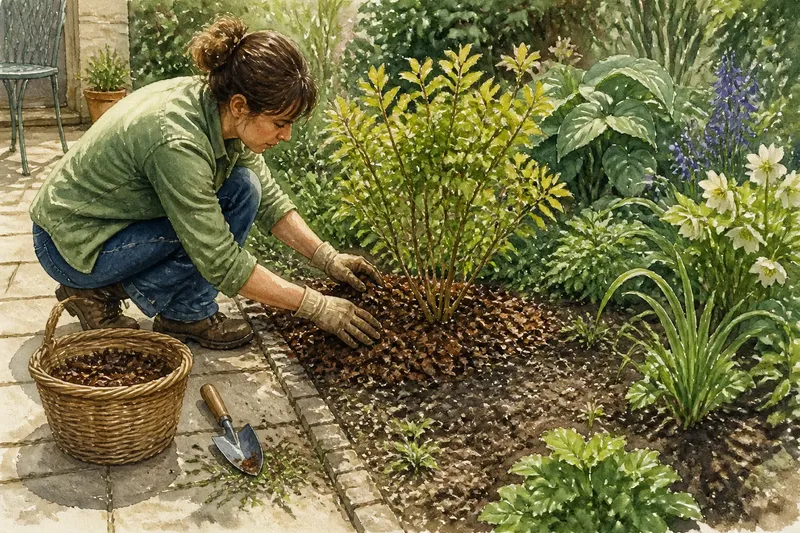
Mulch or bare soil around a border is best decided patch by patch: cover exposed ground that dries or grows weeds repeatedly, and leave manageable areas open. Watch how the soil behaves after rain and during routine care before choosing a surface.
Imagine a hypothetical border beside a small patio, with established perennials in heavy soil, a young shrub near the front, and a narrow path that makes weeding awkward. The gardener wants the planting to look settled without hiding all the soil. That starting point calls for comparing the border’s different patches, then choosing a treatment for each.
Assess the border before choosing a surface
Look at exposed soil after rain and during ordinary care. If a patch crusts, dries quickly, or repeatedly fills with weeds, mulch may help. If it stays workable and weeds are easy to remove, bare soil may be simpler. A sunny edge can dry faster than soil beneath a dense clump, while a low area may remain damp, so one treatment need not suit the whole border.
Consider access, too. Covering a narrow path-side edge may make weeding easier, while spreading material among tightly packed stems can be awkward. In the hypothetical patio border, the gardener leaves shaded ground beneath the thickest perennial foliage open and concentrates attention on the shrub and path edge.
Understand what mulch can and cannot do
Mulch is material laid over the soil. Common options include shredded bark, leaf mold, and compost. A covering can slow moisture loss from exposed ground, cushion the soil surface from heavy rain, and make small weeds easier to spot. Organic materials break down, so check their condition and renew them when needed.
Mulch does not remove the need to water. The surface may look moist while the root zone needs attention, so check the soil beneath the covering. Nor does mulch stop every weed: persistent weeds can still emerge, and seeds can sprout on top. Remove existing weeds before spreading material.
Keep mulch away from plant stems and shrub bases. Material pressed against living growth can hold unwanted dampness and hide the plant’s base during inspection. Use a modest, even covering rather than piling it around stems.
Know when bare soil is the better fit
Bare soil is a deliberate option where plants already shade the ground, where easy inspection matters, or where a damp patch would be harder to manage under a covering. It makes seedlings and weeds visible and lets you see where water collects.
Open ground can also dry or crust more readily, and weeds may establish in gaps. If a patch remains in good condition and is easy to tend, leaving it bare may be entirely workable. If the same spot repeatedly dries or becomes difficult to weed, cover that patch rather than changing the entire bed.
Choose a mulch material that suits the site
Leaf mold and compost have a soft appearance and gradually blend into the soil. Shredded bark remains more visible and can suit a border where a distinct surface is wanted. Gravel stays in place and does not break down like organic material, but it can complicate planting changes and does not replace organic matter when soil improvement is the aim.
Think about access and upkeep before choosing. Coarse material can be difficult to move when planting small perennials; fine material may wash or scatter from an exposed edge. Check product labels and manufacturer instructions for purchased materials, and follow local rules about what is suitable to bring into the garden.
How do you decide between mulch and bare soil?
Does mulch stop weeds completely?
No. It can make some weeds less likely to establish and others easier to spot, but persistent weeds may still emerge. Remove existing weeds before covering the soil.
Can mulch touch a plant stem?
Keep it pulled back from stems and shrub bases. This helps avoid holding dampness against living growth and keeps the base visible for inspection.
Is bare soil a poor choice in a planted border?
Not necessarily. A shaded, well-tended patch may stay manageable without a covering. Reconsider bare soil if that patch repeatedly dries, crusts, or becomes difficult to weed.
Which mulch should you use?
Choose a material that suits the plants, site, appearance, and upkeep you can provide. Consider whether it will stay in place and remain easy to work around as the planting changes.
Adjust the surface as conditions change
In the hypothetical patio border, the gardener weeds the path edge, checks the shrub’s exposed soil, and adds leaf mold there while keeping it clear of the shrub base. The gardener leaves the shaded soil beneath the established perennials bare. The expected result is a path edge that is easier to tend, with open soil still accessible beneath the dense plants; if the shrub area remains damp or the covering obstructs access, the gardener can remove some material.
Not worth the effort: spreading mulch beneath every leaf just to make the surface uniform. It adds work where plants already shade the soil and can make access less convenient. For mulch or bare soil around a border, let each patch’s drainage, plant cover, and upkeep needs guide the choice.